
Coring
In some drilling operations, the operator may require a core sample of the subsurface formation for geological and engineering evaluation. Core samples provide valuable information about formation characteristics such as lithology, porosity, permeability, and fluid content.
Core Samples
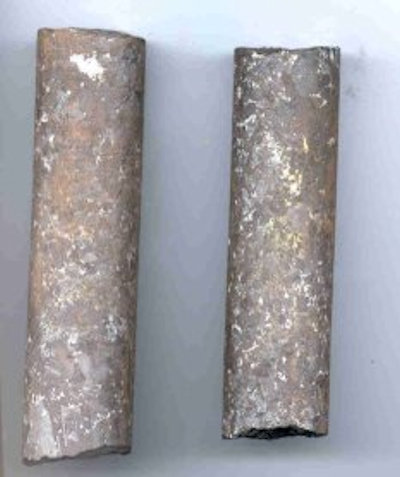
To obtain a core sample, a specially designed core barrel is made up on the drill string and lowered to the bottom of the well. The drill string is then rotated to allow the core bit to cut a cylindrical section of the formation, which is captured inside the core barrel.
Once the coring operation is complete, the core barrel is tripped out of the hole and brought to the surface. The core is carefully removed from the barrel, preserved, and sent to a laboratory for detailed examination and testing.
Potential Hazards
- Being pinched or struck by the core barrel, elevators, or associated tools during floor operations.
- Being struck by the core or core barrel components when the core is removed from the barrel.
- Exposure to pinch points, dropped objects, and struck-by hazards similar to those encountered during tripping in and out of the hole.
- Handling hazards due to the weight, length, and awkward shape of core barrels and core samples.
Possible Solutions
- Wear appropriate Personal Protective Equipment (PPE), including hard hats, gloves, eye protection, and safety-toe boots.
- Train and instruct workers in the proper handling, assembly, and use of specialized coring tools and equipment.
- Keep hands and body parts clear of pinch points during core barrel handling and disassembly.
- Use controlled, stable methods to remove and handle core samples to prevent sudden movement or dropped objects.
- Maintain clear communication between the driller and floor crew during coring and core recovery operations.
Knowledge Check Choose the best answer for the question.
5-8. What hazards are likely while performing the coring process?
You forgot to answer the question!