
Precautions in Walking
Deck barge workers must follow safety precautions when walking on a barge deck to prevent slips, trips, and falls. OSHA provides a checklist to help workers understand safe walking practices. Below are these precautions, each explained with the reason it is important:
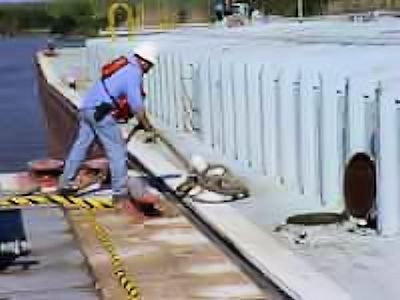
Understand how to safely walk on a barge deck to prevent slips and trips.
- Walk at a normal rate, keeping your hands out of your pockets: Walking normally with your hands free helps maintain balance and allows you to catch yourself if you slip.
- Slow down when moving between different surfaces: Transitioning from dry to wet, or rough to smooth surfaces increases the chance of slipping if you move too fast.
- Do not run: Running makes it harder to react to obstacles or slick surfaces and greatly increases the risk of falling.
- Minimize short stops: Sudden stops can throw off your balance, especially on slippery or unstable surfaces.
- Avoid sharp turns: Turning sharply without adjusting your footing can cause you to lose balance and fall.
- Modify your way of walking to match the surface, such as an icy deck: Taking shorter, slower steps on icy or slick surfaces helps maintain better footing and reduces slip risk.
- Do not jump from one barge to another: Jumping can lead to serious injury if the distance is misjudged or if the landing surface is unstable or slick.
- Do not climb on cargo, supplies, or equipment instead of using a ladder: Cargo and equipment may shift or collapse, causing a fall. Ladders are designed to support safe climbing.
- Do not step on hatch covers: Hatch covers can be slippery or unstable and may not support your weight, leading to a fall or injury.
- Avoid walking along the unguarded edge of a barge: Without a guardrail or fall protection, one slip could result in falling overboard and possible drowning.
- Watch out for reduced visibility due to poor lighting and weather conditions: Low visibility makes it harder to see obstacles or hazards, increasing the risk of slips and trips.
- If working at night, be sure there is adequate illumination (e.g., flashlight, headlight, light tower): Proper lighting ensures that hazards are visible and helps workers safely navigate the deck.
- Wear safety shoes or boots with slip-resistant soles as appropriate: Slip-resistant footwear provides better traction on wet or oily surfaces and helps prevent slipping.
- Keep shoes clean of mud, snow, ice, spilled liquids, and debris: Debris or buildup on the soles of shoes reduces grip and can lead to slipping on smooth surfaces.
Knowledge Check Choose the best answer for the question.
2-3. What should be done to safely walk on a barge deck to prevent slips and trips?
You forgot to answer the question!